

Sexology
What is behind erectile dysfunction?
Published on 26 April 2023 by Teresa Ramírez Ortegón
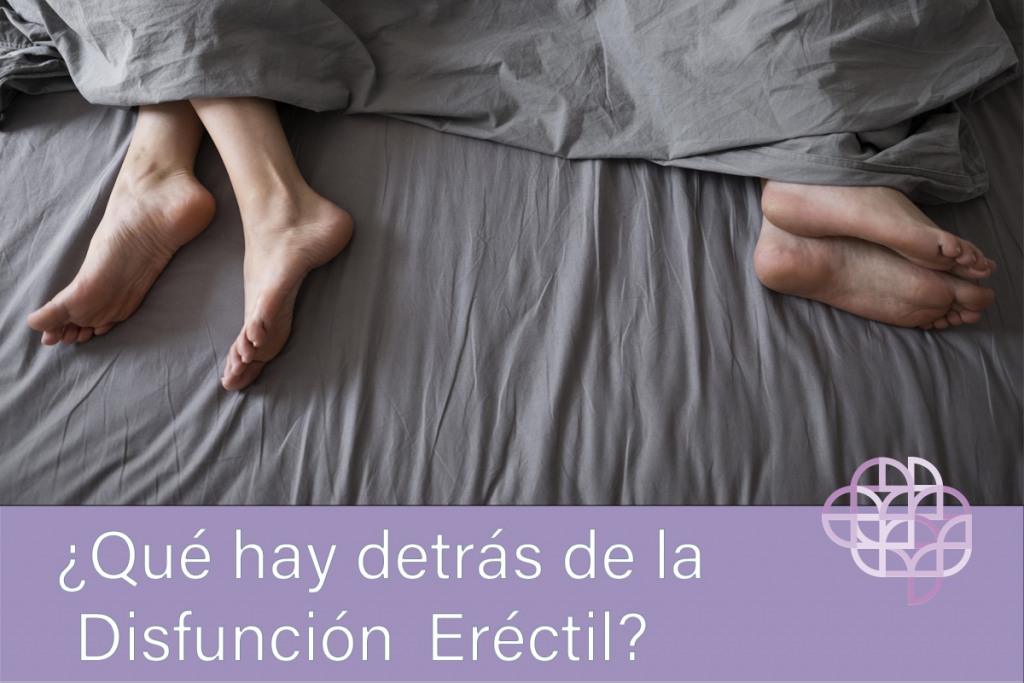
Today’s article looks at a topic that has come up recently in my therapy sessions. I am seeing more young men aged 20–45 who seek help with sexual difficulties such as erectile dysfunction.
As with other difficulties that come up in therapy, sexuality in general and erectile dysfunction in particular can involve hormonal, vascular, psychosocial, cultural and relationship factors. This article looks at some of the psychological factors that may play a part.
What is erectile dysfunction (ED)?
Erectile dysfunction is the persistent inability to get and maintain an erection sufficient for satisfactory sexual performance.
What can contribute to erectile dysfunction?
Several psychological factors can be associated with ED, including:
Fear of not responding as expected with a partner.
Feeling that an erection needs to be very consistent, long-lasting and quick to return.
Being more focused on the partner’s satisfaction, with less attention to one’s own pleasure.
Checking the penis to see how it responds.
Previous unsatisfying sexual experiences that may have had a strong emotional impact.
Low self-esteem
Rejecting one’s own body
Negative beliefs such as “I’m not man enough” or “I’m not good enough”
High expectations about what a partner wants
How can this affect a relationship?
A partner may wonder whether they are to blame, whether they are still desired or whether there is someone else. This can lead to frustration and doubts about the relationship, increasing the pressure the man feels to perform.
As some authors note, that pressure may lead to negative attitudes towards sex and a sense of losing control. Attention shifts from erotic sensations to the perceived consequences of not being able to penetrate. This can increase anxiety, and the erection may fade or fail to develop.
To prevent this from happening again, a person may begin to avoid sex.
By contrast, people with positive sexual experiences often expect an erection when their partner initiates sex. They tend to anticipate sex positively, focus on erotic sensations and respond in ways that make them more likely to engage.
What can help?
Erectile dysfunction can involve many factors. This article covers only some of the psychological ones. A professional can assess the situation and offer individualised care, since the factors that cause and maintain the same difficulty vary from person to person. Sex therapy uses a range of approaches and techniques, and can involve a partner when appropriate.
References:
Cabello Santamaría, F. (2010). Aspectos psicosociales del manejo de la disfunción eréctil: Hábitos tóxicos y estilo de vida. La pareja en la disfunción eréctil. Psicoterapia y terapia de pareja. Archivos Españoles de Urología (Ed. impresa), 63(8), 693-702.