

Blog
Love and relationships: reflections from the practice
Published on 16 June 2025 by Teresa Ramírez Ortegón
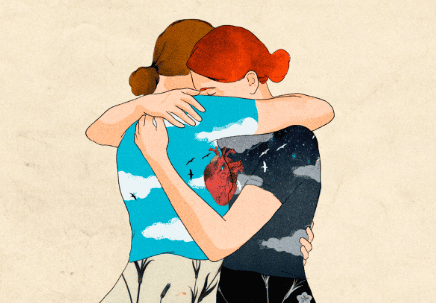
In my experience as psychologist specialized in partners therapy at Jerez de la Frontera, I usually find a recurring question: how to build a healthy and lasting relationship?
Love, as Feliu and Güell put it, isn't just an emotion but a construction that requires considering the well-being of another, your own and, very important, the preservation of individuality. To love means to respect yourself and respect the couple, seeking a balance that will make the relationship fair and mutual.
But achieving that balance isn't easy. To have a partnership requires an effort, commitment and a high dose of realism. There are no completely happy and completely conflictive partners; most of the relationships are passing between these two poles. That's why it's vital to develop skills that will allow us to adapt to our partner's aspects that we have perhaps not anticipated at the beginning.
In many cases, as difficulties appear, the doubt arises: "Do I have been wrong to choose this person?" but it's important that we do not make precipitous decisions. At times what we need is to stop and observe what's happening, how we're communicating, what we're expecting from each other and ourselves. Through therapeutic work, we can better understand both the dynamics that strengthen and those that weaken a relationship.
When two people start living with each other, it's quite common for them to appear true. emotional dependenceWithout noticing, we can start to lose our individuality and this eventually leads to malaise. That's why I put a great deal of emphasis on maintaining our own spaces, growing personal interests and not losing sight of who we are outside our partnership. A relationship between independent people is often much more satisfying with the passing of time.
To preserve that individuality does not mean to distance ourselves but to find a healthy balance: to continue to feel attraction for the partner, to care for their needs but to care for our own.
I often see that many problems with partners come about by avoiding conflicts. We think that if we do not talk about what bothers us, everything will be okay. emotional impairmentThe problems do not go away by themselves. It also happens that one of them expects that the other will change without taking their own responsibility or reviewing their own part.
When the emotional climate becomes tense or distant, it's easy to seek refuge outside the relationship: work, a friendship, even a parallel relationship. All of this can be a way to compensate for what isn't being faced within the couple.
Another common mistake is to believe that love should last "as long as it lasts," as if it were something magical that holds itself without effort. The fact remains that love doesn't end at the same time for both of us, and once one decides to leave and the other doesn't expect it, suffering is inevitable.
Many people come to coexistence with wrong ideas: they believe that problems will be solved on their own with time or that love can do everything. But these thoughts, although understandable, do not reflect reality. Life in a partnership needs engagement, listening, empathy and an active attitude to grow together.
As a psychologist, I know that many couples could come back if they had a place to look at their relationship with other eyes, understand what's happening to them and learn new ways to communicate. In that process, there's always something to work on and something to recover, if both are ready.
Illustration: Giulia Rosa